The International Office for Human Rights Action on Colombia

The Nasa people bring their denunciation of human rights violations in northern Cauca to the European Parliament

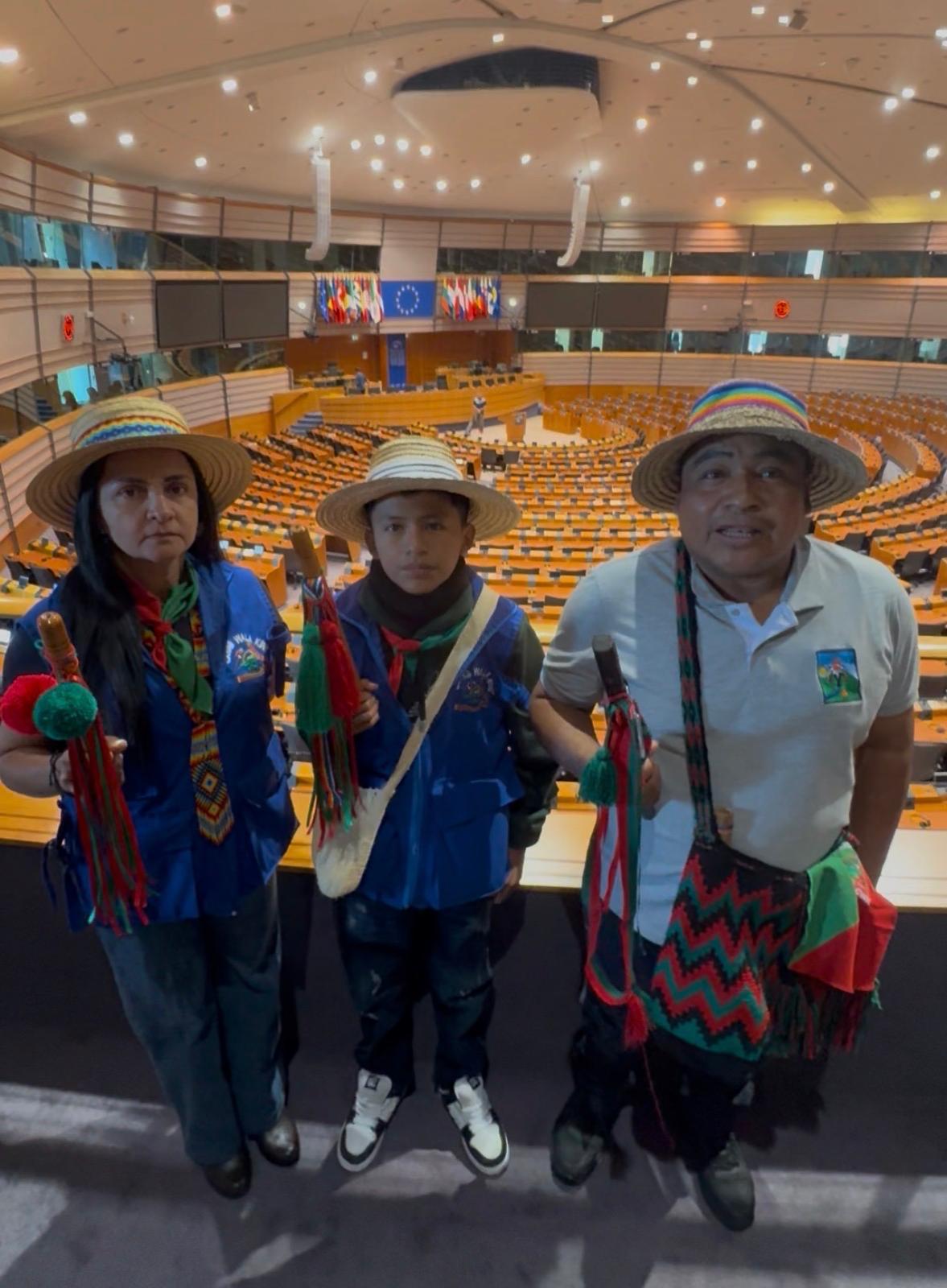
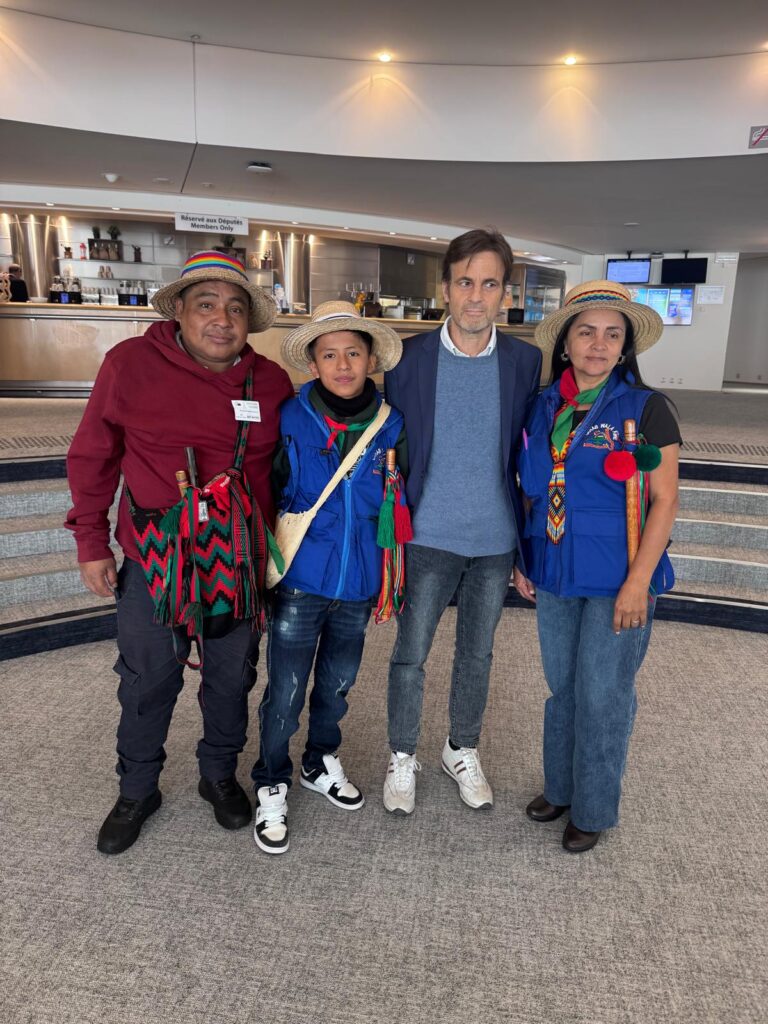
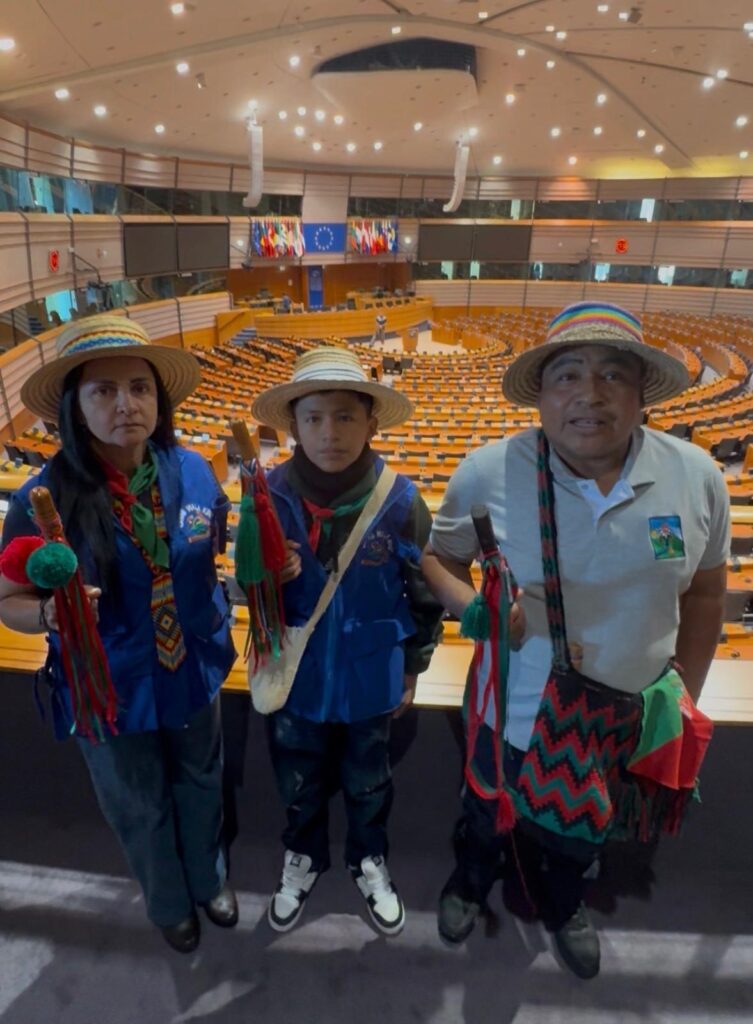
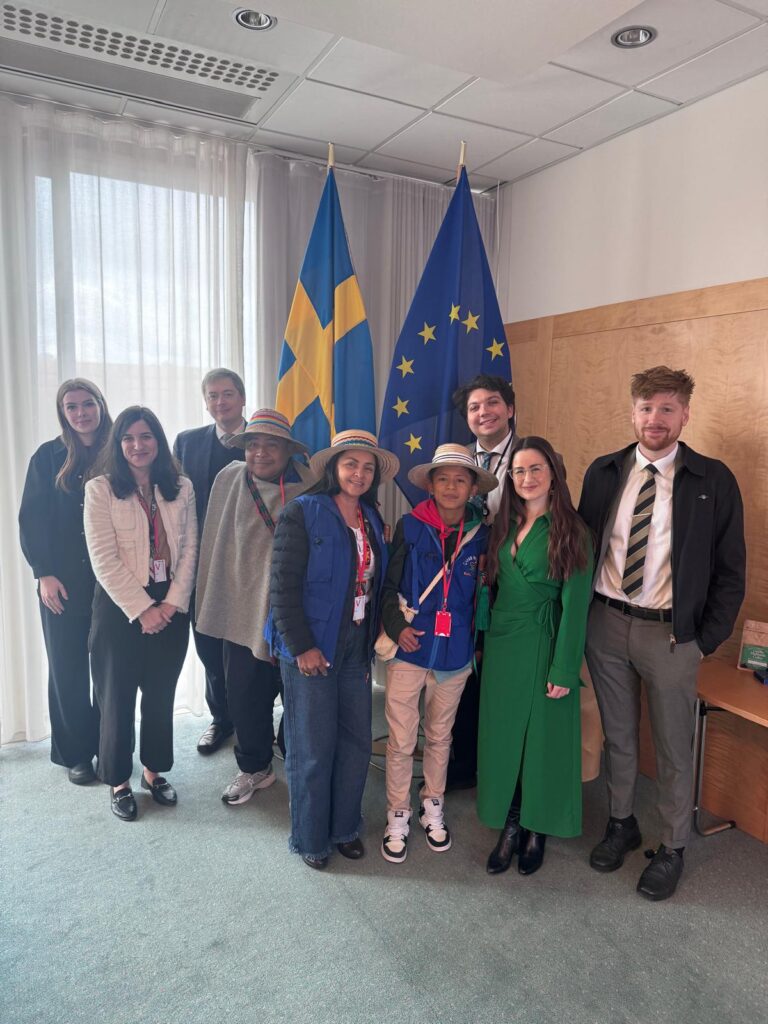
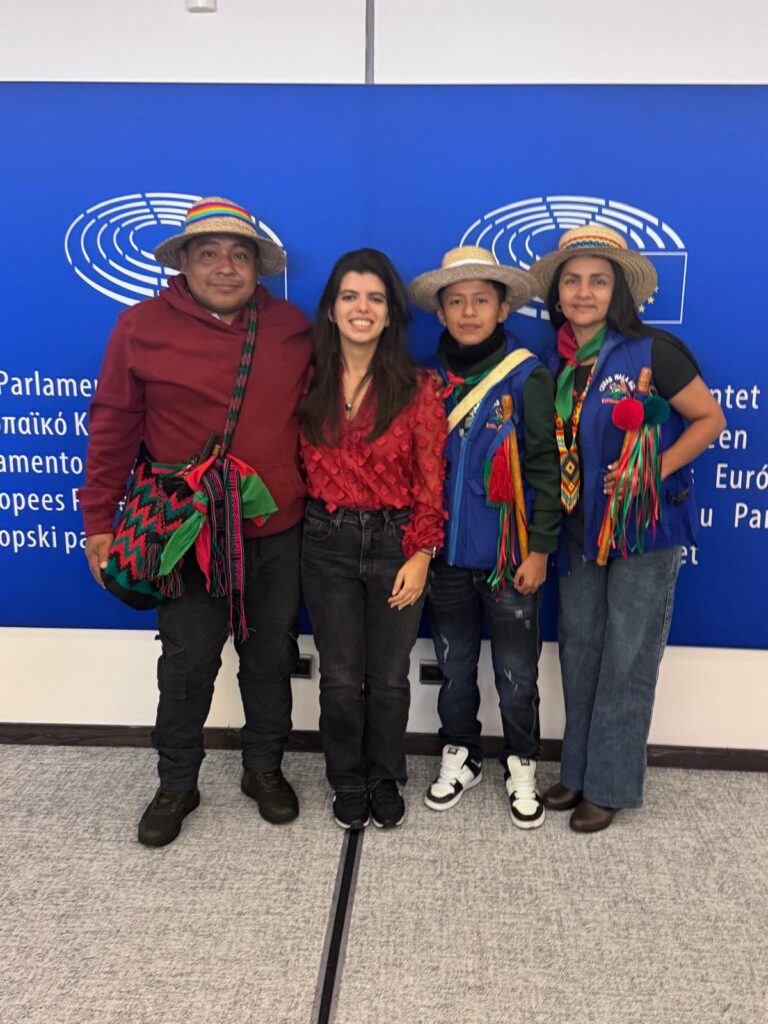
A delegation of the Nasa people, belonging to the Association of Indigenous Councils of Northern Cauca (ACIN) – Çxhab Wala Kiwe, visited Brussels as part of an advocacy agenda aimed at raising awareness of the serious human rights situation faced by indigenous communities in northern Cauca, in a context of ongoing armed conflict.

Accompanied by OIDHACO and Colectivo Maloka, the delegation held meetings at the European Parliament with Members of the European Parliament and representatives of various political groups, as well as with the Secretariat of the Subcommittee on Human Rights (DROI) and the European External Action Service. They also participated in a dialogue with Permanent Representations of EU Member States, with the aim of strengthening international attention to the violence affecting their territories.

One of the main focuses of the agenda was to denounce the violations affecting Nasa children, adolescents and youth, who face serious risks arising from the presence of armed actors, including forced recruitment, threats and other forms of violence. In this context, the delegation presented the report “We Did Not Give Birth to Children for War!”, prepared by the Regional Indigenous Council of Cauca (CRIC), which documents at least 838 cases of forced recruitment in the department of Cauca between 2022 and 2025.

The visit also served to highlight the organisational responses of the Nasa people, who, through their own governance structures, community-based processes and collective protection mechanisms, continue to defend life, territory and collective rights in highly complex conditions.

The delegation also took part in OIDHACO’s assembly, strengthening coordination with international organisations and expanding the reach of their advocacy at the European level.

Through this visit, ACIN brought to European institutions an urgent alert regarding the continuation of serious human rights violations in their territories, calling on the international community to adopt effective measures to ensure the protection of the civilian population, particularly indigenous children and youth.

Our solidarity is universal.

We are deeply concerned about all victims of armed conflict, repression and violence around the world — from Sudan to Syria, including the persecution of the Rohingya and so many other crises that often receive less international attention than they deserve. Each of these situations calls for solidarity, remembrance, justice and action.

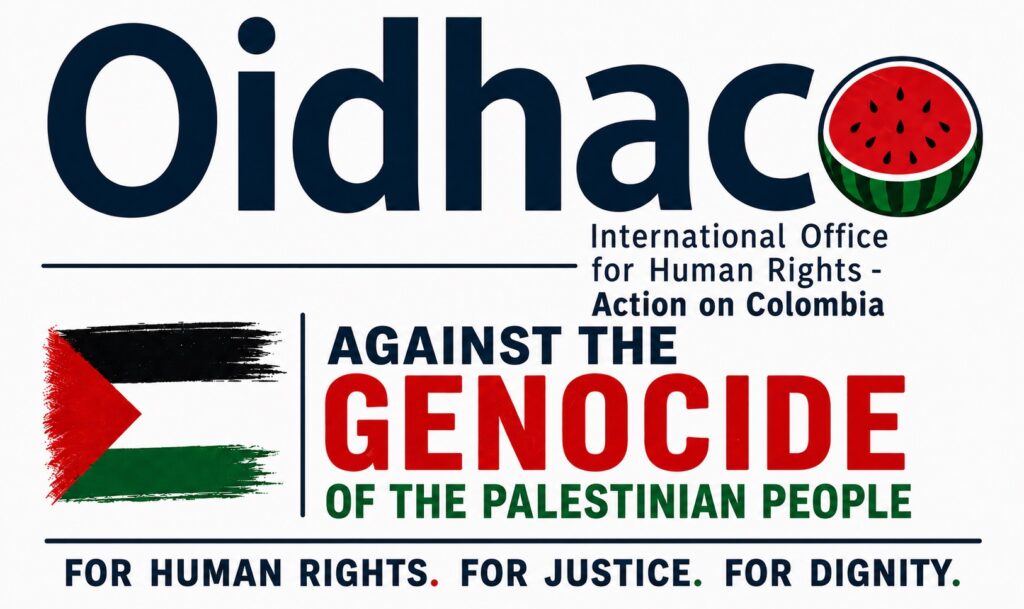
However, we have decided to specifically highlight the message ‘Stop Genocide in Palestine’ because what is happening in Palestine represents not only a human tragedy of enormous magnitude, but also a direct challenge to the fundamental principles of international humanitarian law and to the rules-based international system itself. The indifference and complicity of much of the international community in the face of the apartheid regime imposed by the Israeli government on the Palestinian people represent one of the greatest moral and political contradictions of our time.

The persistent violation of essential norms — such as the protection of the civilian population, the prohibition of collective punishment and respect for proportionality in the use of force — not only has devastating consequences for the Palestinian population, but also erodes the global mechanisms designed to limit the power of states and prevent abuses.

When these rules are repeatedly breached without any effective consequences, the framework that protects all populations in conflict situations, anywhere in the world, is weakened. Therefore, speaking out in this case does not mean ignoring other forms of suffering, but rather emphasising the urgency of defending an international order which, if it collapses, leaves everyone in a more vulnerable position.

Drawing attention to this situation is, therefore, an act consistent with the universal values we uphold: the protection of life, human dignity and respect for international law, without exception.

Oidhaco logo - Oficina Internacional de derechos Humanos - Acción Colombia
Privacy Overview

This website uses cookies so that we can provide you with the best user experience possible. Cookie information is stored in your browser and performs functions such as recognising you when you return to our website and helping our team to understand which sections of the website you find most interesting and useful.