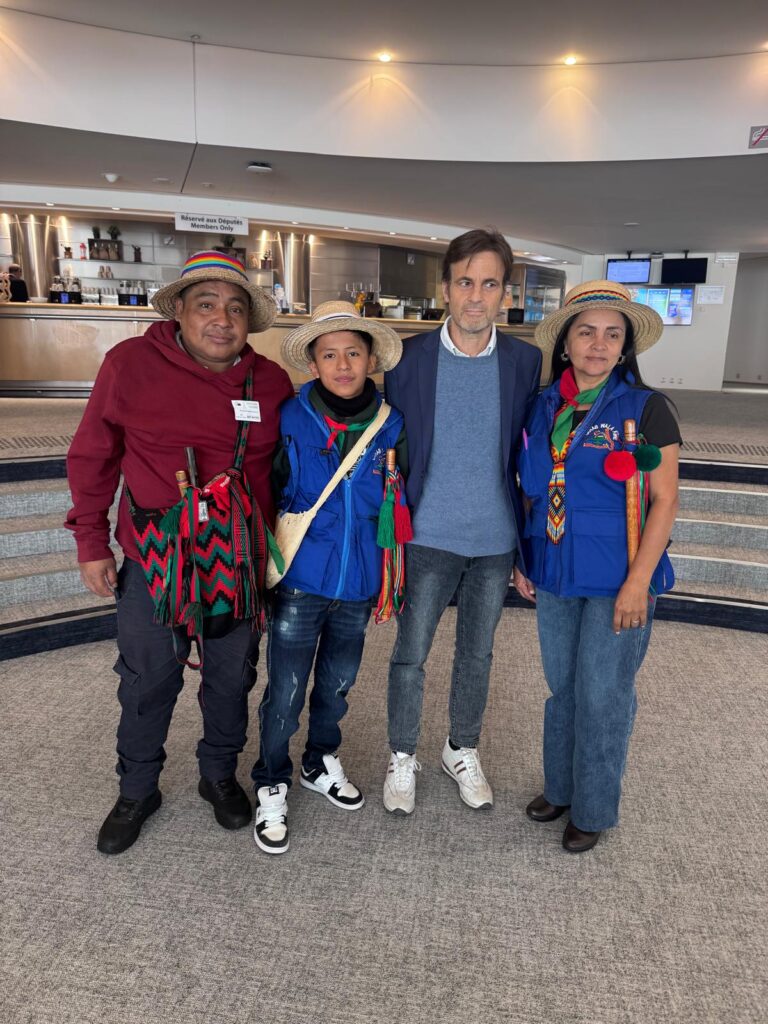
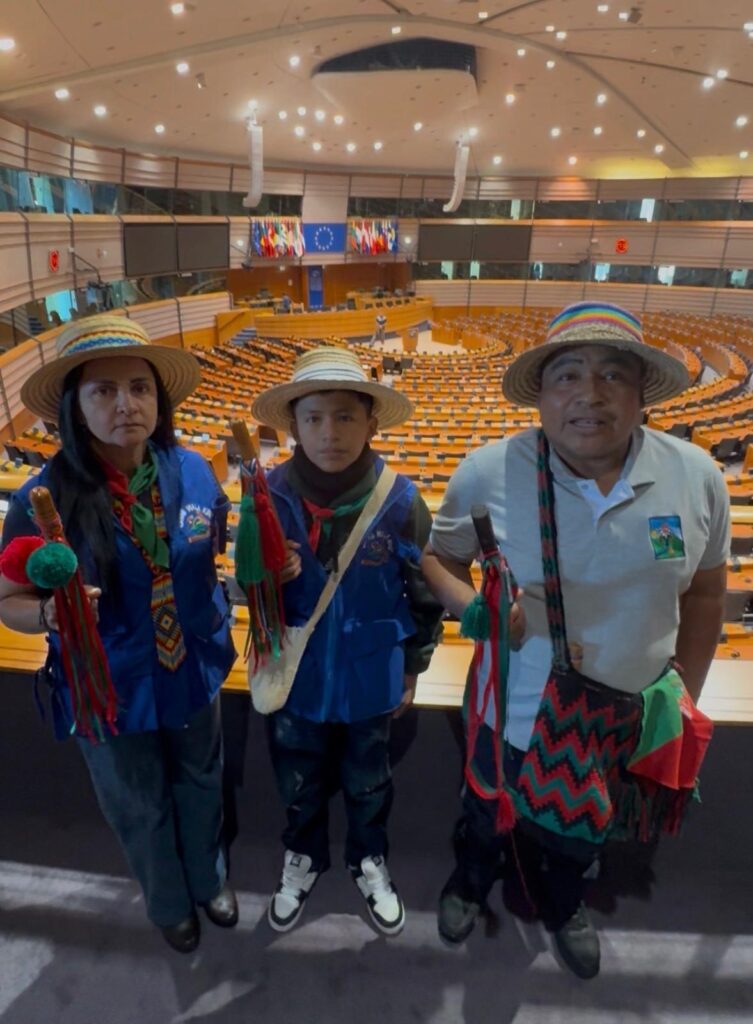
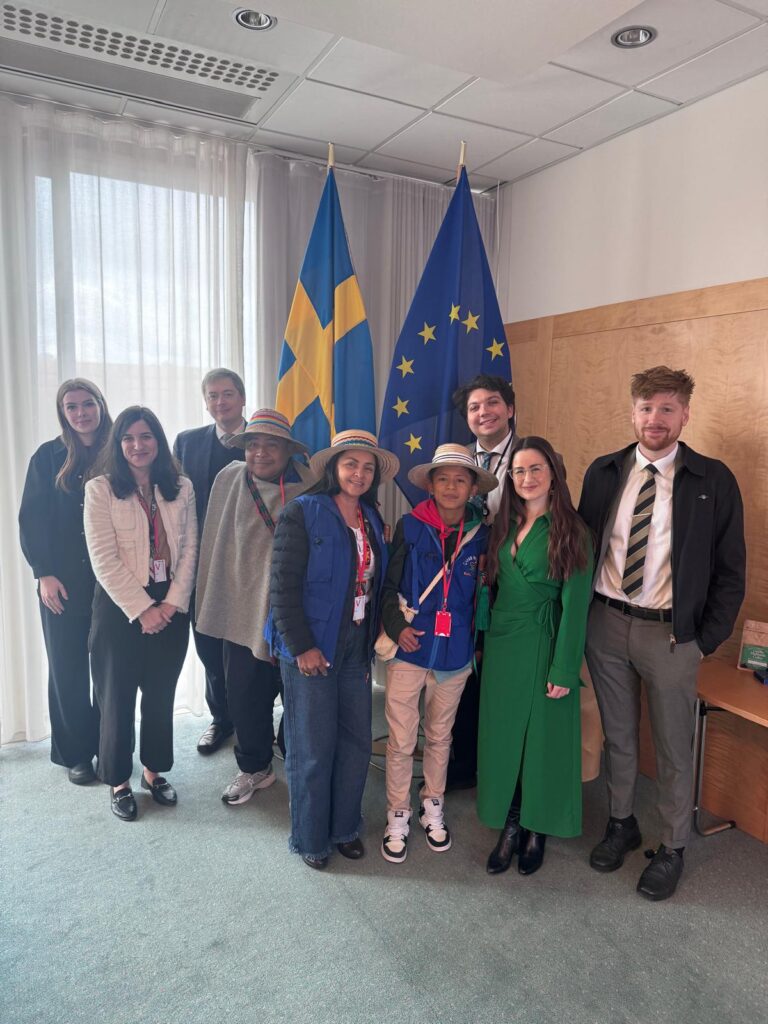
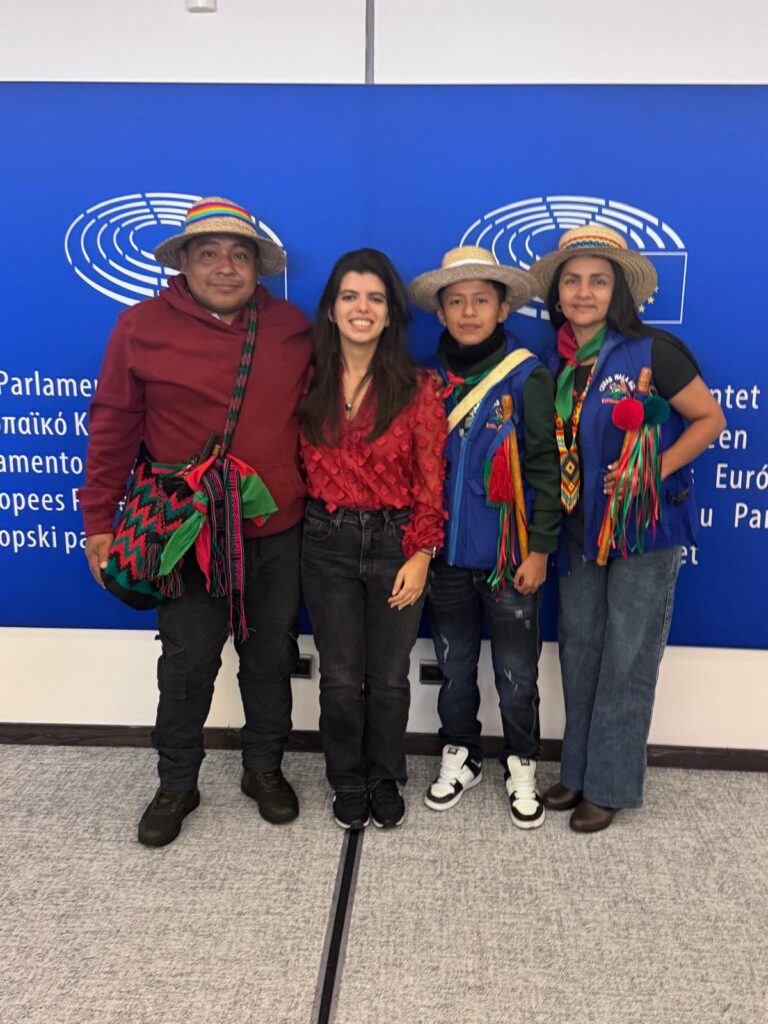
A delegation of the Nasa people, belonging to the Association of Indigenous Councils of Northern Cauca (ACIN) – Çxhab Wala Kiwe, visited Brussels as part of an advocacy agenda aimed at raising awareness of the serious human rights situation faced by indigenous communities in northern Cauca, in a context of ongoing armed conflict.
Accompanied by OIDHACO and Colectivo Maloka, the delegation held meetings at the European Parliament with Members of the European Parliament and representatives of various political groups, as well as with the Secretariat of the Subcommittee on Human Rights (DROI) and the European External Action Service. They also participated in a dialogue with Permanent Representations of EU Member States, with the aim of strengthening international attention to the violence affecting their territories.
One of the main focuses of the agenda was to denounce the violations affecting Nasa children, adolescents and youth, who face serious risks arising from the presence of armed actors, including forced recruitment, threats and other forms of violence. In this context, the delegation presented the report “We Did Not Give Birth to Children for War!”, prepared by the Regional Indigenous Council of Cauca (CRIC), which documents at least 838 cases of forced recruitment in the department of Cauca between 2022 and 2025.
The visit also served to highlight the organisational responses of the Nasa people, who, through their own governance structures, community-based processes and collective protection mechanisms, continue to defend life, territory and collective rights in highly complex conditions.
The delegation also took part in OIDHACO’s assembly, strengthening coordination with international organisations and expanding the reach of their advocacy at the European level.
Through this visit, ACIN brought to European institutions an urgent alert regarding the continuation of serious human rights violations in their territories, calling on the international community to adopt effective measures to ensure the protection of the civilian population, particularly indigenous children and youth.