The International Office for Human Rights Action on Colombia

Parliamentary question regarding Socio-environmental conflicts and territorial rights in Chocó, Colombia

We would like to thank MEP  Rima Hassan and Cristina Guarda for raising the issue of the risk that EU trade and supply chains linked to Colombia may be connected to human rights violations.

Here is the full text of the question submitted on 17 March, which can be found on the European Parliament’s website at this link. Social organisations will be following up on the European Commission’s response.
Socio-environmental conflicts and territorial rights in Chocó, Colombia

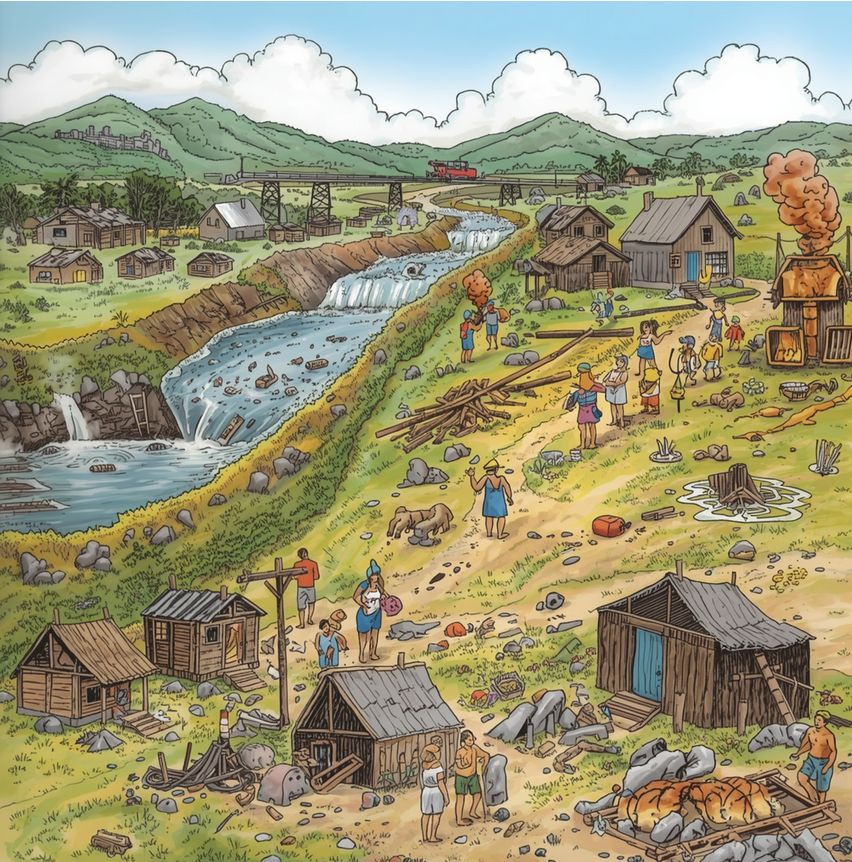
In Chocó, Colombia, the expansion of extensive livestock farming, legal and illegal mining, aerial spraying of monoculture and large-scale deforestation is affecting over 65 000 hectares in the Lower Atrato region[1] and is having a serious impact on the territorial, environmental and cultural rights of indigenous and Afro-descendant communities. Between 2020 and 2023, over 94 % of Colombia’s wood flooring exports lacked legal certification of origin, with around 20 % directed towards markets such as the EU.

In this context:

  1. How does the Commission assess the risk that EU trade and supply chains linked to Colombia may be connected to human rights and environmental violations in Chocó and what due diligence and monitoring mechanisms are in place, including under the EU Regulation on deforestation-free products[2] and the EU Directive on corporate sustainability due diligence[3], to prevent such impacts?
  2. Under Global Gateway, what environmental, social and human rights safeguards apply to projects in Colombia and will EU funding be contingent upon respect for territorial rights and free, prior and informed consent?
The social disaster left behind by the multinational Glencore in Cesar

Article by Agencia Pública Baudó

In this article (in spanish), Camilo Alzate González explains that “for decades, the press and successive governments promoted open-cast coal mining in Cesar and La Guajira as a means of bringing progress to a poor region far removed from the country’s major industrial centres. Now that mining has gone into decline, there is neither progress nor coal left: only vast, desert-like craters, the legacy of the Swiss multinational Glencore, one of the world’s most powerful mining companies with a hundred mines in operation across the globe.”

For this reason, we at the European network OIDHACO have signed the campaign’s call to action against corporate power, to end impunity and in favour of a binding treaty for multinationals within the United Nations.

The Multiple Dimensions of Gender-Based Violence

CLACSO Research

We recommend reading this study (in spanish), produced by researchers from Argentina, Bolivia, Colombia, Paraguay and Guatemala. This work brings five studies into dialogue with one another, forming a coherent picture: gender-based violence is neither isolated incidents nor a temporary phenomenon, but rather structural mechanisms activated and reconfigured within a global context where the radical right seeks to limit the political agency of women and diverse groups, reorganise public space and re-establish an exclusionary model of citizenship.

Our solidarity is universal.

We are deeply concerned about all victims of armed conflict, repression and violence around the world — from Sudan to Syria, including the persecution of the Rohingya and so many other crises that often receive less international attention than they deserve. Each of these situations calls for solidarity, remembrance, justice and action.

However, we have decided to specifically highlight the message ‘Stop Genocide in Palestine’ because what is happening in Palestine represents not only a human tragedy of enormous magnitude, but also a direct challenge to the fundamental principles of international humanitarian law and to the rules-based international system itself. The indifference and complicity of much of the international community in the face of the apartheid regime imposed by the Israeli government on the Palestinian people represent one of the greatest moral and political contradictions of our time.

The persistent violation of essential norms — such as the protection of the civilian population, the prohibition of collective punishment and respect for proportionality in the use of force — not only has devastating consequences for the Palestinian population, but also erodes the global mechanisms designed to limit the power of states and prevent abuses.

When these rules are repeatedly breached without any effective consequences, the framework that protects all populations in conflict situations, anywhere in the world, is weakened. Therefore, speaking out in this case does not mean ignoring other forms of suffering, but rather emphasising the urgency of defending an international order which, if it collapses, leaves everyone in a more vulnerable position.

Drawing attention to this situation is, therefore, an act consistent with the universal values we uphold: the protection of life, human dignity and respect for international law, without exception.

Oidhaco logo - Oficina Internacional de derechos Humanos - Acción Colombia
Privacy Overview

This website uses cookies so that we can provide you with the best user experience possible. Cookie information is stored in your browser and performs functions such as recognising you when you return to our website and helping our team to understand which sections of the website you find most interesting and useful.