The International Office for Human Rights Action on Colombia

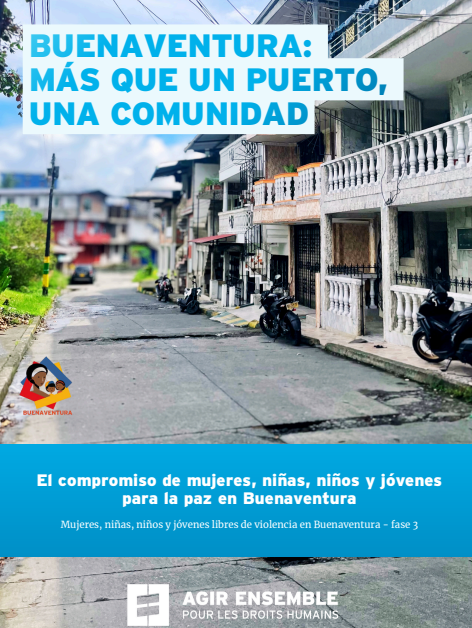
Buenaventura: more than a port, a community.

The commitment of women, children and young people to peace in Buenaventura

We are delighted to share here the report from one of the French organisations in the OIDHACO network – Agir Ensemble pour les Droits Humains.

The report begins with this poem written by the children and young people involved in the project.

In Buenaventura, fear sometimes touches us,
but in our hearts, hope springs forth.
We want violence to be just a story,
and peace to be felt in every moment.
When we unite, we are a river that flows forward,
stronger than any conflict or vengeance.
Our voices together, a chorus of love,
so that friendship and warmth reign on this earth.
We want love, we want a hug,
so that the painful traces are erased from every street.
With joy and faith, we paint a better future,
where every boy and girl lives without fear.
From Buenaventura, beautiful port of the sea,
a cry for justice rises without violence.
Together we march, one heart,
because we know that peace is our mission.

This poem sums up the spirit of the report: it speaks of violence, yes, but above all it speaks of resistance. In Buenaventura, community and civil society organisations are creating safe spaces, devising peace education programmes, reviving art, culture, ancestral knowledge, restorative justice and the traditions of the Colombian Pacific as resources for rebuilding the social fabric. Peace, here, is not a slogan: it is patient, embodied work, applied to everyday gestures.

The report will be presented at a side event during the 61st session of the Human Rights Council in Geneva.

Here is the link to the report in Spanish, and the link to the report in French.
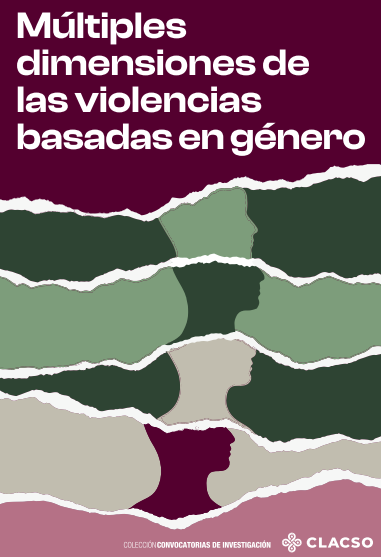
Multiple dimensions of gender-based violence

We would like to share with you this book produced by the Latin American Council of Social Sciences (CLACSO) (in spanish)

Gender-based violence is neither homogeneous nor one-dimensional, but is shaped and marked by dimensions such as ethnicity, race, class, gender, age, disability, territory, among others. These intersections can aggravate or modify the nature, experience, and impact of violence. We are witnessing an intensification of gender-based violence, a fact that has prompted CLACSO to encourage research on the subject. The chapters presented here, which are the result of this call for papers, focus on the analysis of gender-based political violence against women leaders, activists, human rights defenders and environmental advocates, using a multidimensional approach with an emphasis on its articulation with economic violence and symbolic violence.

We leave you with this book, which not only brings together critical reflections and rigorous research, but also constitutes a collective invitation to imagine and build other possible futures. A future where the political participation of women and dissidents is free from violence, where their voices are heard, respected and protected, and where public institutions and society as a whole are committed to guaranteeing real conditions of equality, security and justice.

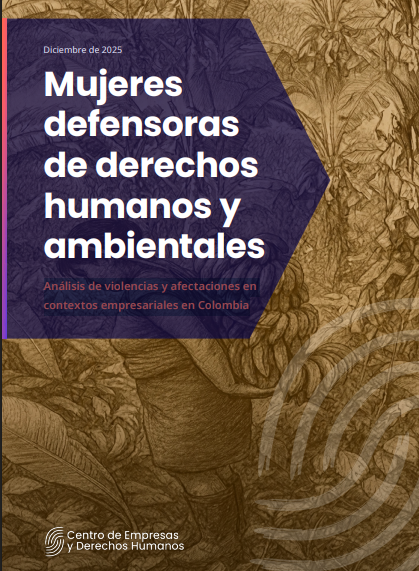
Women defenders of human and environmental rights

Analysis of violence and its impact in business contexts in Colombia

We would like to share this report from the Business and Human Rights Resource Centre (in spanish)

Colombia is one of the most dangerous countries in the world for those who defend human rights in the face of abusive business practices. These individuals lead vital efforts to expose exploitation and demand accountability, but they continue to face systematic attacks that seek to silence their voices and curb resistance. In particular, women human rights and environmental defenders face gender-based violence, ranging from sexual assault and physical violence to smear campaigns and attacks against their families. This violence, especially in the context of mining and extractive projects, highlights the urgent need to understand the dynamics, risks and gaps in protection that persist in the country.

This report responds to that need and proposes an analysis from a gender perspective, recognising that business activities have a differentiated impact on women defenders, especially those who sustain life in the territories despite the disproportionate burden of care resulting from the unequal distribution of gender roles.”

For this reason, OIDHACO insists on the need for the European Union and its member countries Switzerland, Norway and the UK to implement binding standards and mechanisms to monitor business activity and its impacts; mechanisms that must include the real participation of civil society.

Parliamentary question on the international monitoring of the Peace Agreement in Colombia

We would like to thank MEPs Pernando Barrena Arza (The Left), Leoluca Orlando (Verts/ALE) and Anthony Smith (The Left) for their commitment to human rights and peace in Colombia. At Oidhaco, we have insisted on the need for international monitoring of the implementation of the 2016 Peace Agreement in Colombia.


Here is the full text of the question submitted by the MEPs on 13 January, which can be found on the European Parliament’s website at this link. Social organisations will be following up on the European Commission’s response.

Reduced international monitoring of the Peace Agreement in Colombia

In June 2025, the Office of the United Nations High Commissioner for Human Rights in Colombia announced a 50% reduction in its budget, leading to the closure of three regional offices and a reduction in monitoring capabilities in a climate where violence and human rights violations are rife – let us not forget that a human rights defender is murdered every two days.

The United Nations Security Council has decided that the mandate of its verification mission in the country will not include enforcement of transitional justice sanctions and the implementation of the Agreement’s chapter on ethnic measures (only 13% of which had been implemented by November 2024).

Given the EU’s economic and political commitment to human rights and the implementation of the Agreement:

  1. What specific measures does the Commission intend to take to shore up the EU’s political and financial support for the Office of the High Commissioner?
  2. What specific measures does the Commission intend to take to shore up the EU’s political and financial support for the verification mission?
  3. What specific measures does the Commission intend to take to shore up political and financial support for civil society organisations monitoring the agreements on the ground?

Our solidarity is universal.

We are deeply concerned about all victims of armed conflict, repression and violence around the world — from Sudan to Syria, including the persecution of the Rohingya and so many other crises that often receive less international attention than they deserve. Each of these situations calls for solidarity, remembrance, justice and action.

However, we have decided to specifically highlight the message ‘Stop Genocide in Palestine’ because what is happening in Palestine represents not only a human tragedy of enormous magnitude, but also a direct challenge to the fundamental principles of international humanitarian law and to the rules-based international system itself. The indifference and complicity of much of the international community in the face of the apartheid regime imposed by the Israeli government on the Palestinian people represent one of the greatest moral and political contradictions of our time.

The persistent violation of essential norms — such as the protection of the civilian population, the prohibition of collective punishment and respect for proportionality in the use of force — not only has devastating consequences for the Palestinian population, but also erodes the global mechanisms designed to limit the power of states and prevent abuses.

When these rules are repeatedly breached without any effective consequences, the framework that protects all populations in conflict situations, anywhere in the world, is weakened. Therefore, speaking out in this case does not mean ignoring other forms of suffering, but rather emphasising the urgency of defending an international order which, if it collapses, leaves everyone in a more vulnerable position.

Drawing attention to this situation is, therefore, an act consistent with the universal values we uphold: the protection of life, human dignity and respect for international law, without exception.

Oidhaco logo - Oficina Internacional de derechos Humanos - Acción Colombia
Privacy Overview

This website uses cookies so that we can provide you with the best user experience possible. Cookie information is stored in your browser and performs functions such as recognising you when you return to our website and helping our team to understand which sections of the website you find most interesting and useful.