The International Office for Human Rights Action on Colombia

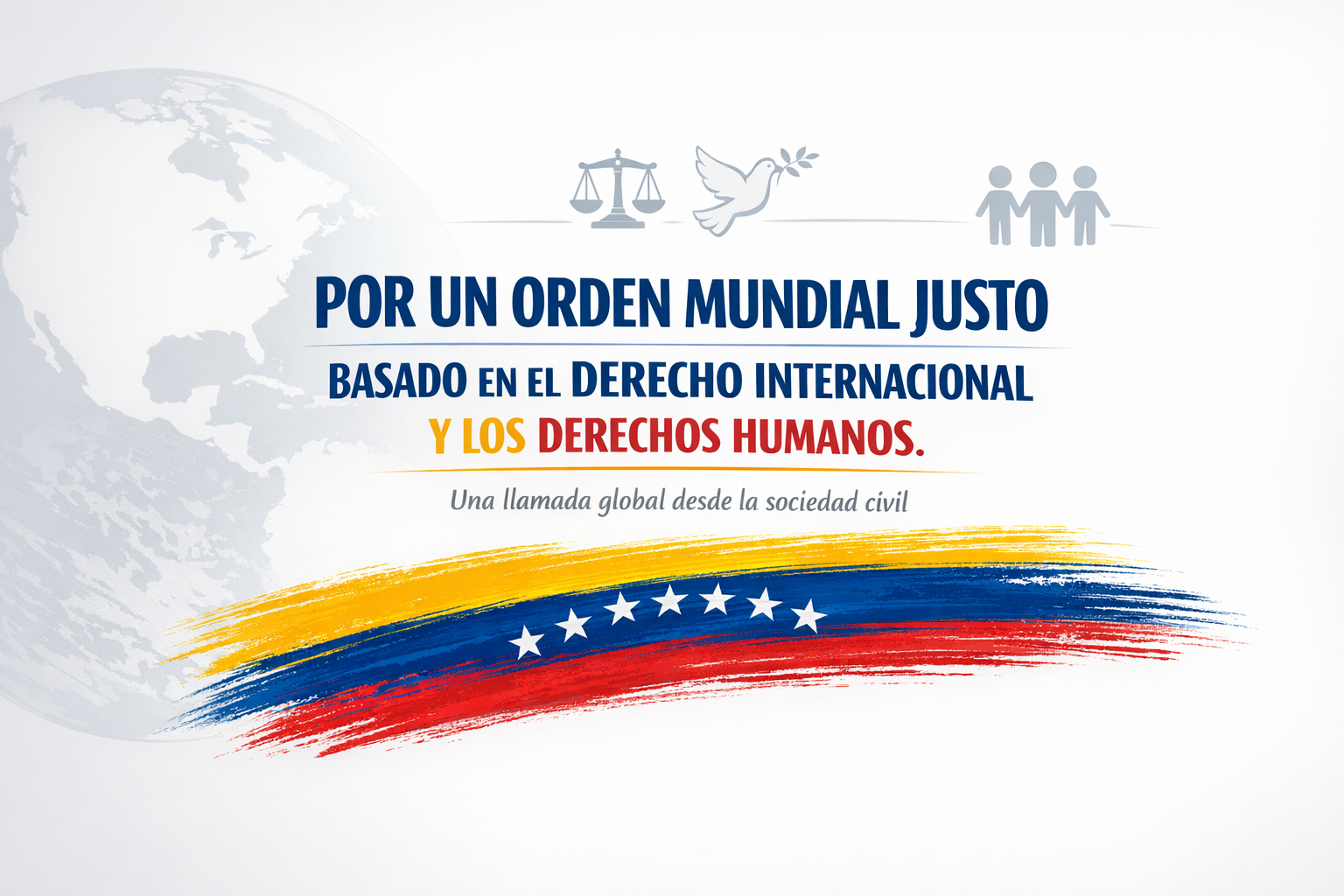
Global call from civil society: For a just world order based on international law and human rights.

Social and human rights organisations in Latin America and Europe express deep concern about unilateral military actions that violate the sovereignty of States and the fundamental principles of international law. The use of force outside the framework of international law and outside the United Nations Charter seriously jeopardises the lives of civilians, regional stability and the international legal order. Peace, self-determination of peoples and the peaceful resolution of disputes must prevail over any geopolitical interests, and we call on the international community to prioritise diplomacy, independent verification of facts and compliance with international norms that guarantee coexistence among nations.

Report of the United Nations Verification Mission in Colombia, 26 December 2025

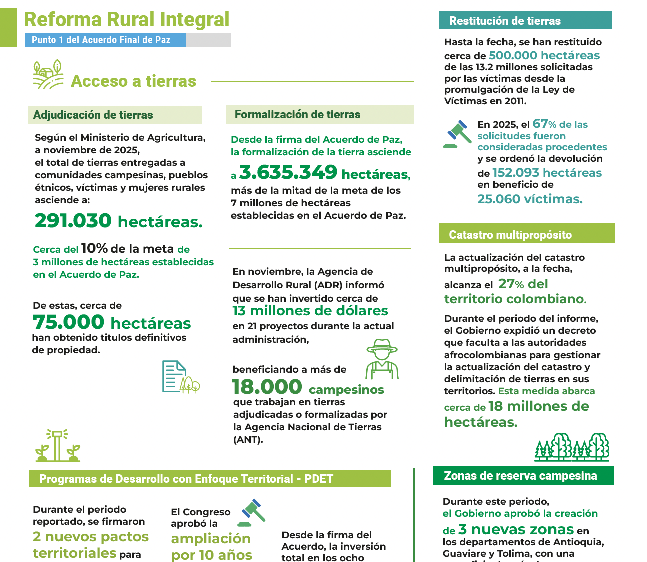
The Final Peace Agreement of Colombia “is comprehensive in nature and should be fully implemented so that its promise of peace, justice, and reconciliation can be fully realized.” These are the words of António Guterres, Secretary-General of the United Nations, in his latest report on the UN Verification Mission in Colombia. These are words that Oidhaco fully shares. Indeed, the Final Peace Agreement is the foundation for reaching new agreements with the armed actors currently present in Colombia and for moving towards a true and lasting peace.

Much remains to be done: only 10% of the land distribution target for small-scale farmers has been met, and in 2025, 45 signatories of the peace agreement were killed. “Between 27 September and 30 November 2025, the Office of the United Nations High Commissioner for Human Rights (UN Human Rights) received 13 reports of massacres, with 33 registered victims. During the same period, UN Human Rights received 33 reports of killings of human rights defenders.”

While progress has been made, significant challenges remain, both situational and institutional. We call on all candidates for the upcoming elections—both legislative and presidential—to take ownership of the peace agreement, defend it, and implement it; the achievement of peace in Colombia depends on its implementation.

Likewise, we call on the institutions of the European Union, its Member States, Switzerland, Norway, and the UK to maintain strong support for its implementation, as well as for Colombian civil society, which is working to transform the reality on the ground.
At the CELAC-EU 2025 Summit in Santa Marta, civil society challenges the direction of the bi-regional partnership and reaffirms a common agenda for a just transition.

In the context of the CELAC-EU 2025 Summit held in Santa Marta, civil society organizations from Europe and Latin America and the Caribbean collectively challenge the current direction of the bi-regional partnership, while recognizing the importance of political dialogue between both regions and its potential to advance toward more just and sustainable societies. From a perspective of human rights, climate justice, and democracy, we raise concerns about the persistence of extractivist models in trade, investment, and cooperation, as well as the limited and ineffective participation of communities and civil society. We advocate for an alternative agenda that places at its core a just transition, decent work, gender equality, protection of territories, climate justice, and the strengthening of civic space as the foundation of a more equitable CELAC-EU partnership, consistent with international commitments on human rights and climate.

Our solidarity is universal.

We are deeply concerned about all victims of armed conflict, repression and violence around the world — from Sudan to Syria, including the persecution of the Rohingya and so many other crises that often receive less international attention than they deserve. Each of these situations calls for solidarity, remembrance, justice and action.

However, we have decided to specifically highlight the message ‘Stop Genocide in Palestine’ because what is happening in Palestine represents not only a human tragedy of enormous magnitude, but also a direct challenge to the fundamental principles of international humanitarian law and to the rules-based international system itself. The indifference and complicity of much of the international community in the face of the apartheid regime imposed by the Israeli government on the Palestinian people represent one of the greatest moral and political contradictions of our time.

The persistent violation of essential norms — such as the protection of the civilian population, the prohibition of collective punishment and respect for proportionality in the use of force — not only has devastating consequences for the Palestinian population, but also erodes the global mechanisms designed to limit the power of states and prevent abuses.

When these rules are repeatedly breached without any effective consequences, the framework that protects all populations in conflict situations, anywhere in the world, is weakened. Therefore, speaking out in this case does not mean ignoring other forms of suffering, but rather emphasising the urgency of defending an international order which, if it collapses, leaves everyone in a more vulnerable position.

Drawing attention to this situation is, therefore, an act consistent with the universal values we uphold: the protection of life, human dignity and respect for international law, without exception.

Oidhaco logo - Oficina Internacional de derechos Humanos - Acción Colombia
Privacy Overview

This website uses cookies so that we can provide you with the best user experience possible. Cookie information is stored in your browser and performs functions such as recognising you when you return to our website and helping our team to understand which sections of the website you find most interesting and useful.