

We are delighted to share this news about the National Human Rights Award in Colombia, which is presented by our member Diakonia Sweden and Act Swedish Church with the support of the Swedish Embassy in Colombia.
Category: “Defender of the Year”
A person whose work over the past year has been a significant testimony to the defence of human rights. The title refers to outstanding work carried out by an individual over the past year.
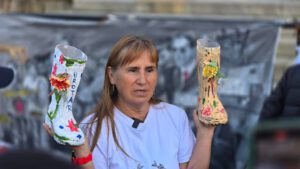
One of the leading figures in the fight against impunity for extrajudicial killings committed by the Colombian National Army, in which people were kidnapped, tortured, and murdered, only to be later presented as guerrillas killed in combat. Her brother Jaime was one of the thousands of victims of this macabre practice, which led her to become a leader and form the Foundation of Mothers of False Positives of Soacha and Bogotá (MAFAPO).
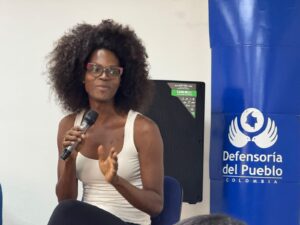
A trans leader from Quibdó, Chocó, promotes the rights of LGBTIQ+ people through her foundation Latidos Chocó. Her work focuses on ensuring access to justice, health, education, and decent workplaces, with a special focus on Afro-Colombian trans women. Despite facing threats, harassment, and armed attacks, her leadership has been key to reducing stigma towards diverse people in the region. For her work, she has received the Tulipán Human Rights Award (2023) and the Héctor Abad Gómez Award (2024).
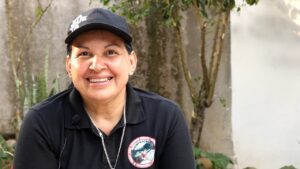
A peasant woman and defender of the environment and human rights. For more than two decades, she has been committed to defending life, land, and nature. In her leadership role, she has confronted the uncontrolled expansion of the agricultural frontier, the spread of illicit crops, pollution generated by the oil industry, and deforestation. She carries out her work as an advocate and social leader through ASINTRACAMPIC, an organization that has challenged entrenched interests in the border region of Piamonte, Cauca.
Category: “COLLECTIVE EXPERIENCE OR PROCESS OF THE YEAR”
A collective experience that stands out for its work in defending human rights over the past year in two areas. Two prizes will therefore be awarded in this category: one for grassroots and community social processes and another for NGOs.
Community social process
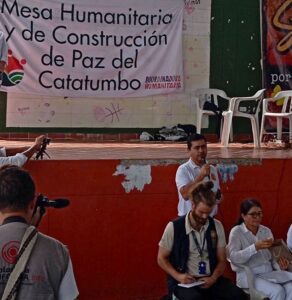
Their main aspiration is the implementation of a truly comprehensive and democratic agrarian reform that addresses the needs for access to land, credit, technical assistance, social welfare projects, and support for rural enterprises. They are fighting for respect for the lives of the inhabitants of the municipalities that make up the Catatumbo region, located in Norte de Santander. Its members defend the rights of peasants amid disputes and territorial control imposed by illegal armed actors.
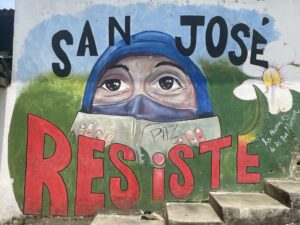
Despite living in one of the regions most affected by armed conflict, in San José de Apartadó the dream of living in peace and dignity survives. To this end, they created ACASA, an organization that works to strengthen community spaces while promoting human rights issues and monitoring the situation in the territory. As an association, they work to promote, protect, and defend human rights, which has led to their members suffering threats, accusations, and prosecutions.
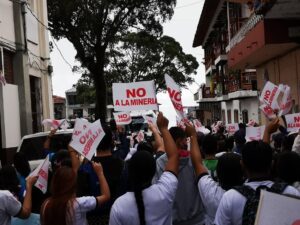
Composed of peasant families, especially from the mining exploration area located in the Palocabildo district. Its focus is on education and citizen mobilization in defense of the territory against mining projects that could lead to the loss of cultural identity and heritage. Due to their demonstrations and sit-ins, the mining company filed criminal charges against 11 of its members, and the Attorney General’s Office brought them to trial, which is awaiting resolution. The case of the 11 from Jericó has sparked solidarity and gained national and international attention due to the resistance of a peasant population against extractive megaprojects.
NGO, collective, or accompanying NGOs.
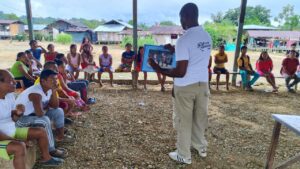
Combining prevention strategies, training, and community work, the Colectivo Cimarronaje supports victims of anti-personnel mines in 14 municipalities in the department of Chocó, strengthening local leadership and revitalization processes with people, most of whom have disabilities. Their work faces constant risks such as displacement, recruitment, and extortion, which is why they have protection measures in place. Thanks to their territorial approach and institutional alliances, they have been recognized with the CaMINA award.
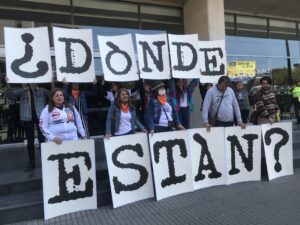
Created in 2005, it brings together more than 200 organizations demanding truth, justice, and guarantees of non-repetition for victims of forced disappearance, extrajudicial executions, and displacement. It has promoted the creation of the National Search System, raised awareness of cases through campaigns such as “Where are they?” and denounced paramilitarism as state policy. It has also promoted institutional reforms, memorials, and legal actions such as the mural “Who gave the order?” Its work has been the target of threats, harassment, and censorship.
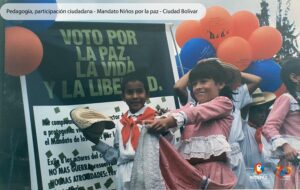
Since 1993, he has coordinated efforts between communities, organizations, and entities to build peace from the ground up. He has promoted dialogue with armed groups, accompanied victims of the conflict, and promoted regulations such as the Victims Law and the Children’s Mandate for Peace. His Transformative Memory program strengthens leadership and demands truth, justice, and reparation. It has been the target of threats and surveillance. Its work has been recognized by Congress, municipal councils, and the Victims Unit for its contribution to the defense of human rights.
Category: LIFETIME ACHIEVEMENT AWARD
Awarded to human rights defenders for their courage, perseverance and presence in the defence of human rights, with a minimum of 30 years of work in Colombia.
Human rights defender with more than 40 years of experience. Since 2006, she has been Technical Secretary of the Colombia-Europe-United States Coordination (CCEEU), where she leads the coordination of 285 organizations. Her work focuses on national and international advocacy, collective protection, peacebuilding, and reporting violence against social leaders. She has promoted alliances with human rights platforms and international networks. Her work began in 1982 with ATI and has included positions in the National Forum for Colombia and international organizations.
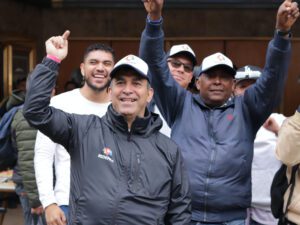
Human rights defender and co-founder of REDEPAZ, an organization with a presence in more than 20 departments. He was one of the driving forces behind the Citizen Mandate for Peace, which in 1997 collected more than 10 million signatures for a negotiated end to the armed conflict. He has led processes of citizen participation, peace education, social dialogue, and protection of communities at risk. His work has included accompanying victims, reporting rights violations, and civil resistance actions. He has been the target of threats and harassment for his advocacy for dialogue, demilitarization, and the reintegration of ex-combatants.
A nun of the Sacred Heart of Jesus, she has accompanied communities affected by armed conflict for decades. She promoted inclusive education in Manizales and participated in peasant movements in Santander during the Turbay Ayala administration. She was singled out and expelled from the diocese, forcing her into exile in 1980. Upon her return, she joined the Intercongregational Commission for Justice and Peace (CIJP), where she supported return processes and Humanitarian Zones in the Lower Atrato and the Pacific. In 2022, she published the book Caminantes del amor eficaz para sembrar vida (Walkers of Effective Love to Sow Life), which compiles her memoirs.
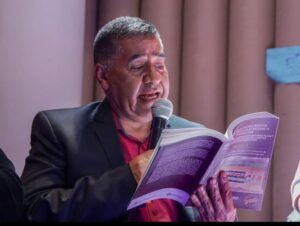
Human rights defender in Nariño. He began his career in the 1990s in social organizing processes in the Pacific region of Nariño. He was a leader of the Teachers’ Union (SIMANA) and has headed the Permanent Committee for Human Rights in Nariño since 2006, promoting the defense of human rights, international humanitarian law, and the documentation of violations. He has held positions on human rights and peace committees and actively accompanied the social unrest of 2021. In 2023, the State was convicted of violations committed against him and he is currently the beneficiary of protection measures ordered by the IACHR.