The International Office for Human Rights Action on Colombia

Colombian women defenders are bringing the peace and gender agenda to Brussels.

Mujeres Construyendo en Paz
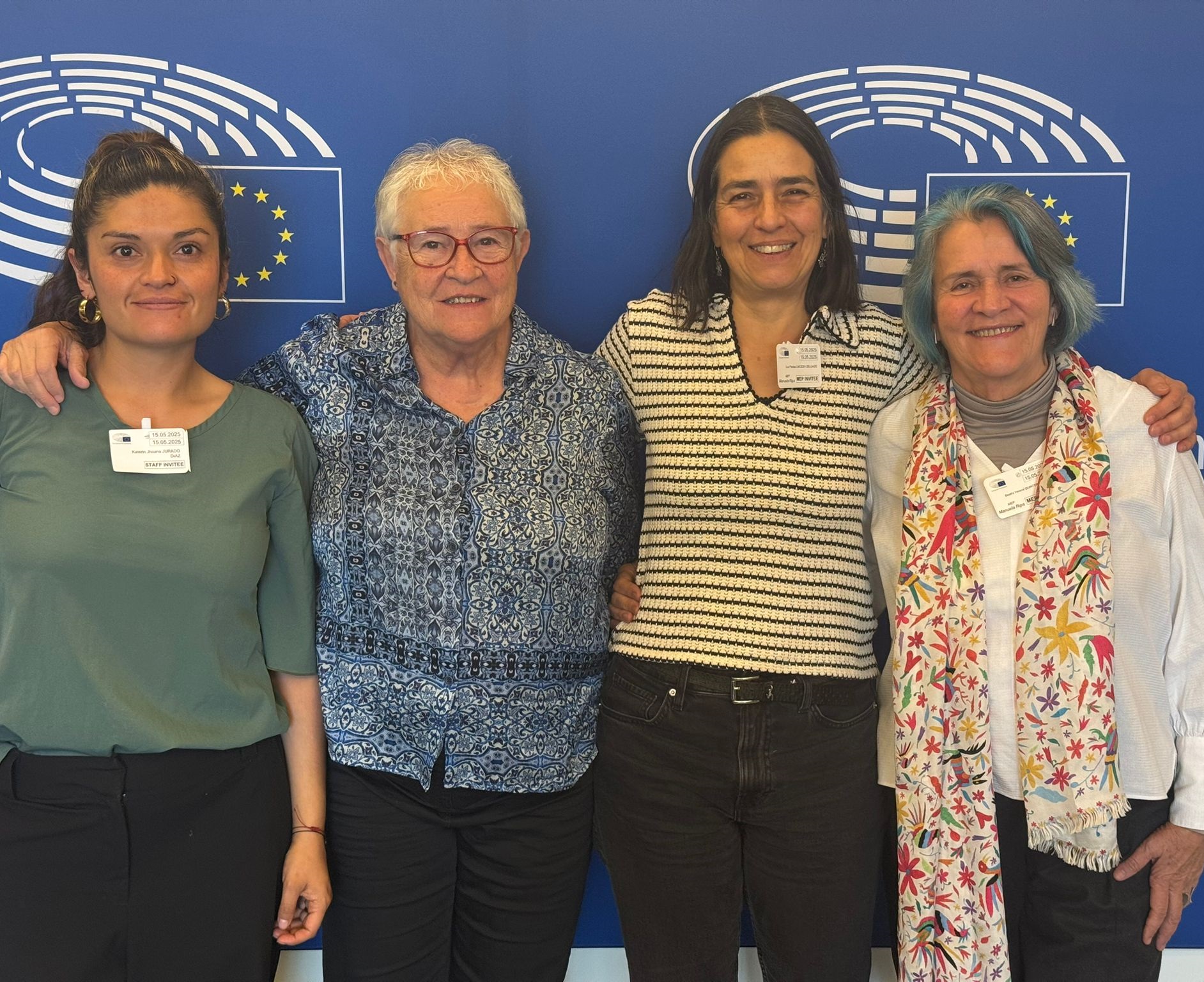
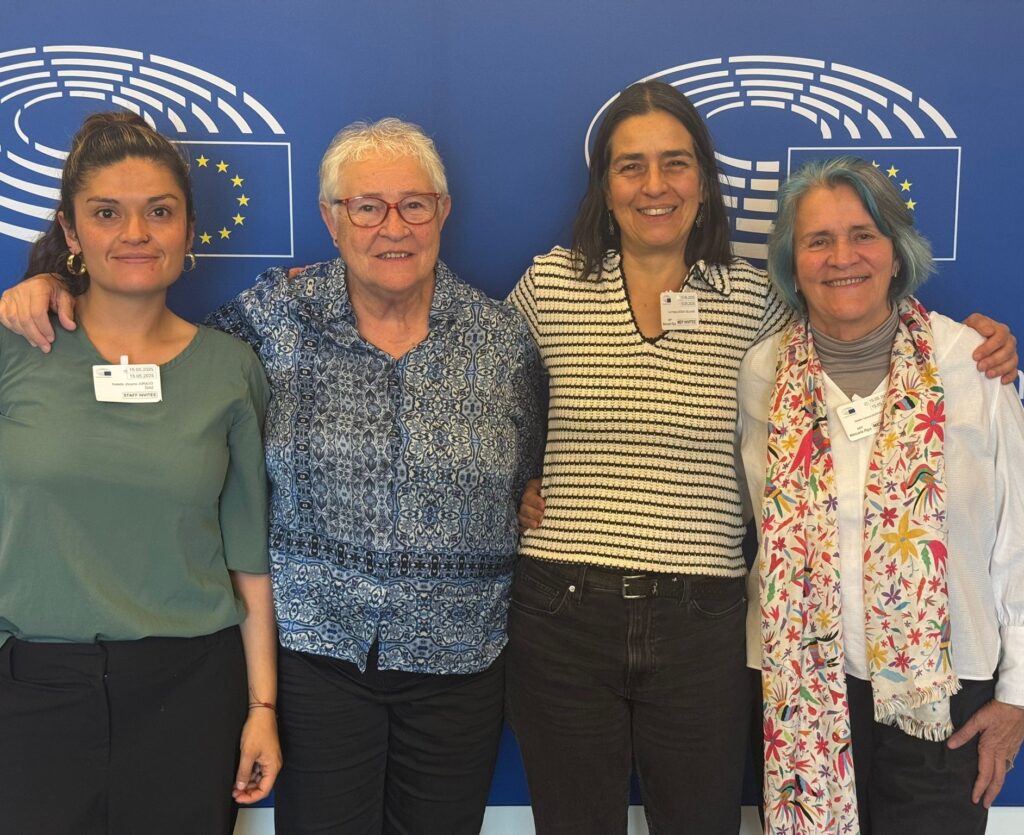
Katerin Jurado, Consuelo Vidal, Luz Piedad Caicedo, Beatriz Quintero.

Brussels, 15 May 2025 – A delegation of Colombian women human rights defenders and representatives of Colombian feminist organisations has successfully completed an advocacy tour of Brussels. The visit aimed to strengthen the ties of cooperation between the European Union (EU) and Colombia, with a focus on implementing the Peace Agreement, adopting a gender-based approach, and protecting women social leaders.

During their stay, the delegation met with key figures from the European Commission, including the Directorate-General for International Partnerships (INTPA) and the European External Action Service (EEAS), as well as MEPs from various political groups and parliamentary committees. The delegation also participated in the presentation of the report ‘IV EU-CELAC Summit: Challenges and Promises’, during which they emphasised the importance of amplifying women’s voices in these bi-regional forums.

The Colombian organisations also drew attention to the growing dangers faced by women human rights defenders, the vulnerability of the National Action Plan 1325 for peace and security, and the shift in European cooperation towards investment models that could exclude grassroots organisations.

The delegation concluded that the tour was a significant step towards closer political collaboration between Colombian women human rights defenders and European stakeholders. They also reaffirmed the importance of inter-institutional alliances in safeguarding peace and human rights in Colombia.
Visit to Colombia: Report of the Working Group on the issue of human rights and transnational corporations and other business enterprises

It is clear to the Working Group that “the prevailing economic model favours the exploitation of natural resources through large-scale projects with high production volumes” and “that this model has systematically marginalized Indigenous, Afrodescendent and campesino communities in the territories where resources are concentrated”.

In addition, the Working Group noted that “business activities, especially in the extractive, agricultural and energy sectors, are often accompanied by social conflicts and human rights violations”. The report stresses that “the Working Group has received complaints about the serious situation faced by human rights and environmental defenders, who frequently suffer attacks, reprisals and stigmatization in the context of large business projects”.

For this reason, the social movement has been promoting the need for a UN Binding Treaty for Transnational Corporations on Human Rights.

Report of the visit to Colombia of the Special Rapporteur on extreme poverty and human rights

The Special Rapporteur on extreme poverty and human rights, Olivier De Schutter, visited Colombia between 26 August and 4 September 2024. Its report reflects the country’s complex situation, progress and challenges.

According to the report, “the rate of income poverty decreased from 36.6 per cent of the population in 2022 to 33 per cent in 2023 and the extreme poverty rate was reduced from 13.8 per cent to 11.4 per cent“. But on the other hand, “income inequality remains very high, however: the Gini coefficient is 0.53, one of the highest rates in the world. In addition, certain segments of the population are significantly more impacted by poverty: 58.4 per cent of the Indigenous population were living in poverty in 2023, which is almost 50 per cent higher than the national average“.

The report also underlines that “poverty in Colombia, as in many other countries, has a woman’s face. Over 40 per cent of households headed by women are in a situation of monetary poverty compared to one third of the households headed by men, while 16.7 per cent of women and 11.6 per cent for men were in situations of extreme poverty in 2022.

This report is highly recommended to understand Colombia.

Our solidarity is universal.

We are deeply concerned about all victims of armed conflict, repression and violence around the world — from Sudan to Syria, including the persecution of the Rohingya and so many other crises that often receive less international attention than they deserve. Each of these situations calls for solidarity, remembrance, justice and action.

However, we have decided to specifically highlight the message ‘Stop Genocide in Palestine’ because what is happening in Palestine represents not only a human tragedy of enormous magnitude, but also a direct challenge to the fundamental principles of international humanitarian law and to the rules-based international system itself. The indifference and complicity of much of the international community in the face of the apartheid regime imposed by the Israeli government on the Palestinian people represent one of the greatest moral and political contradictions of our time.

The persistent violation of essential norms — such as the protection of the civilian population, the prohibition of collective punishment and respect for proportionality in the use of force — not only has devastating consequences for the Palestinian population, but also erodes the global mechanisms designed to limit the power of states and prevent abuses.

When these rules are repeatedly breached without any effective consequences, the framework that protects all populations in conflict situations, anywhere in the world, is weakened. Therefore, speaking out in this case does not mean ignoring other forms of suffering, but rather emphasising the urgency of defending an international order which, if it collapses, leaves everyone in a more vulnerable position.

Drawing attention to this situation is, therefore, an act consistent with the universal values we uphold: the protection of life, human dignity and respect for international law, without exception.

Oidhaco logo - Oficina Internacional de derechos Humanos - Acción Colombia
Privacy Overview

This website uses cookies so that we can provide you with the best user experience possible. Cookie information is stored in your browser and performs functions such as recognising you when you return to our website and helping our team to understand which sections of the website you find most interesting and useful.