“On the occasion of International Women’s Day, OIDHACO celebrates the role that women have played in building peace in Colombia and a fairer world”, says Maïté Verheylewegen, President of Oidhaco.
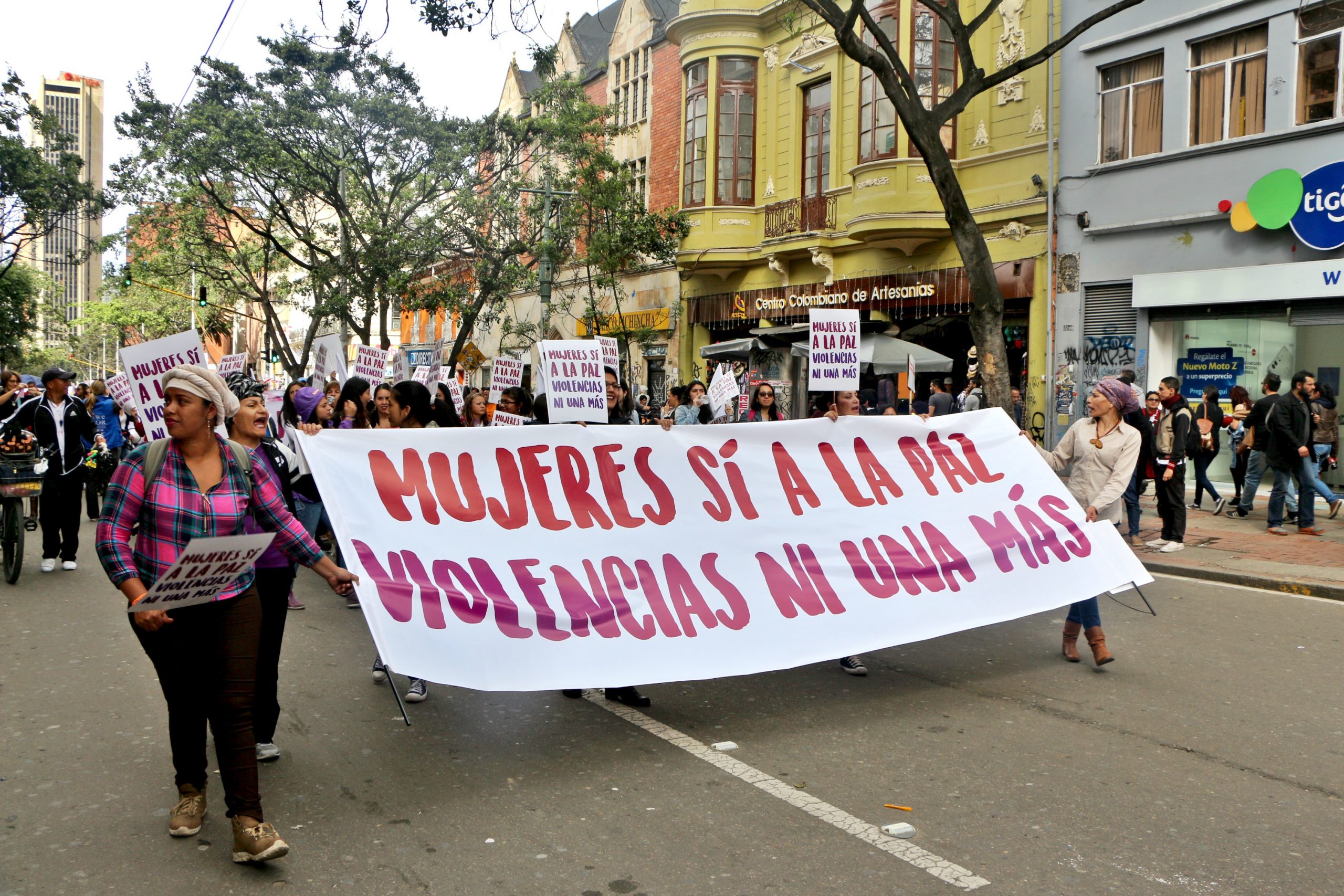
Brussels, 7 March 2025. This 8 March, as the world commemorates International Women’s Day, it is crucial to highlight the fundamental role that women play in building a more peaceful and fairer world. Women have been and continue to be crucial agents of change in peace processes and conflict resolution globally, promoting actions in defence of gender equality and fighting for structural changes in their communities and territories.
In a country marked by decades of armed conflict, women have played a crucial role in the search for peace and reconciliation. Throughout Colombia’s history, women have been agents of change and protagonists in the search for peace, and recent initiatives such as the adoption of the Law of Women Seekers[1] (Law 2364) in June 2024, are a reflection of the long road that organisations such as the Nydia Erika Bautista Foundation, together with women’s organisations in various regions of the country, have taken to continue their work in the search for and clarification of the truth.
The Law of Women Seekers marks a milestone in the search for peace in Colombia by officially recognising the crucial role of women in the construction of historical memory and national reconciliation. This pioneering legislation, unique in the world, grants women seekers the status of “peace builders” and subjects of special constitutional protection, establishing concrete measures for their comprehensive protection and well-being. It also guarantees their access to fundamental rights such as housing, health and education. The law establishes 23 October as the National Day of Recognition for Women and Persons Seeking Victims of Enforced Disappearance, thus honouring their tireless struggle, and contributing to collective healing and progress towards lasting peace in Colombia.
In her intervention at the 58th session of the United Nations Human Rights Council, Maarit Kohonen Sheriff of the Office of the High Commissioner for Human Rights stressed “the importance of the new law on women searching for victims of enforced disappearance“. She highlighted the unprecedented progress that this law represents in Latin America. “The innovative capacity of women in peacebuilding and justice is a fundamental reason to encourage their greater participation in politics. In the 2023 territorial elections, only 13.3% of mayoralties were won by women, which shows the need to boost their presence in spaces for dialogue between civil society and the state, as well as in peace processes and dialogues with armed actors. We reiterate the urgency of implementing the gender chapter of the peace agreement”, concludes Maïté Verheylewegen, president of Oidhaco.
[1] Law that comprehensively recognises and protects the rights of women seeking victims of enforced disappearance.