The International Office for Human Rights Action on Colombia

Parliamentary question on the European Commission’s proposal to include Colombia in a list of safe countries of origin.

We would like to thank MEP Pernando BARRENA for his commitment to human rights and peace in Colombia. From Oidhaco we have positioned ourselves against the existence of a list of safe countries of origin which could be in contradiction with Article 3 of the 1951 Convention Relating to the Status of Refugees.

Here is the full text of the question presented by the MEP on 07 July, which can be found on the website of the European Parliament at this link. From the social organisations we will be waiting and monitoring the response of the European Commission.
Considering Colombia a ‘safe country of origin’

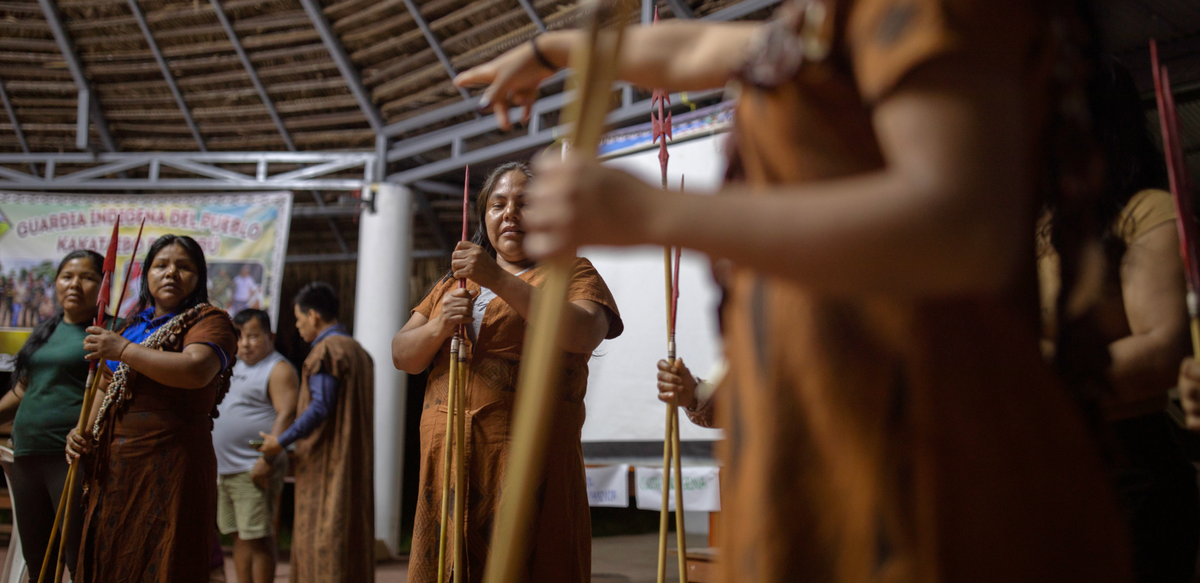
In a meeting with the European network the International Office for Human Rights Action on Colombia (Oidhaco) and the Colombian platform CCEEU, we were informed about the serious situation of human rights defenders in Colombia. In their latest reports, Global Witness and Front Line Defenders conclude that Colombia is the most dangerous country in the world for human rights defenders and in particular for community leaders, indigenous peoples and those who defend territory and the environment. Front Line Defenders states that of the 324 human rights defenders killed in the world, 157 were killed in Colombia. According to the INDEPAZ observatory, from 1 January 2025 to 20 May 2025, 65 human rights defenders and social leaders were assassinated. The armed conflict is also affecting more and more population groups. The Ombudsman’s Office of Colombia identified at least 11 critical humanitarian emergency hotspots and the presence of non-state armed actors in 73 % of the national territory.

  1. Against this bleak backdrop, how can the Commission consider including Colombia on a list of safe countries of origin?
  2. Beyond calculations based on the number of asylum requests and rejection rates – which vary greatly from country to country – what were the criteria used by the Commission?
Share:

On Key

Related Posts

OIDHACO at the 62nd session of the United Nations Human Rights Council

As part of the 62nd session of the United Nations Human Rights Council in Geneva, OIDHACO spoke during the dialogue with the Independent Expert on protection against violence and discrimination on the grounds of sexual orientation and gender identity. Link to the full session OIDHACO also took the floor during the interactive dialogue with the

PRELIMINARY STATEMENT, European Union Election Observation Mission to Colombia 2026

The EU Mission emphasised that the election day was transparent, well-organised and underpinned by robust democratic institutions. It noted that the process unfolded in an orderly manner, despite the polarised political climate, questions surrounding the electoral system and security challenges. The EU EOM emphasised that Colombia had once again demonstrated its institutional capacity to organise

The Catalonia Election Observation Mission describes Election Day in Colombia as “calm and peaceful,” although it notes “isolated irregularities”

The Catalonia Election Observation Mission for the second round of the presidential elections in Colombia has described Election Day on Sunday, June 21, as “calm and peaceful,” despite having detected “isolated irregularities.” The mission is made up of 26 people, including members of the Parliament of Catalonia and representatives of institutions and civil society organizations

Our solidarity is universal.

We are deeply concerned about all victims of armed conflict, repression and violence around the world — from Sudan to Syria, including the persecution of the Rohingya and so many other crises that often receive less international attention than they deserve. Each of these situations calls for solidarity, remembrance, justice and action.

However, we have decided to specifically highlight the message ‘Stop Genocide in Palestine’ because what is happening in Palestine represents not only a human tragedy of enormous magnitude, but also a direct challenge to the fundamental principles of international humanitarian law and to the rules-based international system itself. The indifference and complicity of much of the international community in the face of the apartheid regime imposed by the Israeli government on the Palestinian people represent one of the greatest moral and political contradictions of our time.

The persistent violation of essential norms — such as the protection of the civilian population, the prohibition of collective punishment and respect for proportionality in the use of force — not only has devastating consequences for the Palestinian population, but also erodes the global mechanisms designed to limit the power of states and prevent abuses.

When these rules are repeatedly breached without any effective consequences, the framework that protects all populations in conflict situations, anywhere in the world, is weakened. Therefore, speaking out in this case does not mean ignoring other forms of suffering, but rather emphasising the urgency of defending an international order which, if it collapses, leaves everyone in a more vulnerable position.

Drawing attention to this situation is, therefore, an act consistent with the universal values we uphold: the protection of life, human dignity and respect for international law, without exception.

Oidhaco logo - Oficina Internacional de derechos Humanos - Acción Colombia
Privacy Overview

This website uses cookies so that we can provide you with the best user experience possible. Cookie information is stored in your browser and performs functions such as recognising you when you return to our website and helping our team to understand which sections of the website you find most interesting and useful.