GENEVA – Alarmed by the dramatic escalation of conflict in the Catatumbo region of the department of North Santander since the beginning of the year, UN experts* today called on the Government of Colombia to ensure protection of civilians throughout the country and urged non-state armed groups to end their attacks against civilians.
“Colombia is facing displacement on a scale not seen in decades,” the experts said.
“This crisis demands an urgent and comprehensive response from the State to protect vulnerable civilians, particularly peasants, Indigenous Peoples, women, children, and refugees and migrants from Venezuela.”
On 16 January 2025, the Ejército de Liberación Nacional (ELN), launched an offensive ostensibly targeting members of the Frente 33, a dissident faction of the Fuerzas Armadas Revolucionarias de Colombia – Ejército del Pueblo (FARC-EP). Armed conflict between the two groups has displaced more than 56,000 people. An additional 27,000 people are confined by the ongoing insecurity, unable to move in search of protection, basic services, or to earn a living.
“In addition to forced displacement and confinement, non-state armed groups have reportedly subjected civilians in North Santander to extrajudicial executions, acts tantamount to enforced disappearances, sexual and gender-based violence particularly against women and girls, human trafficking, and the recruitment of children,” the experts said.
“These acts constitute grave violations of international law, which must be investigated with perpetrators held accountable.”
The experts noted that the conflict has disproportionately impacted groups already in situations of vulnerability.
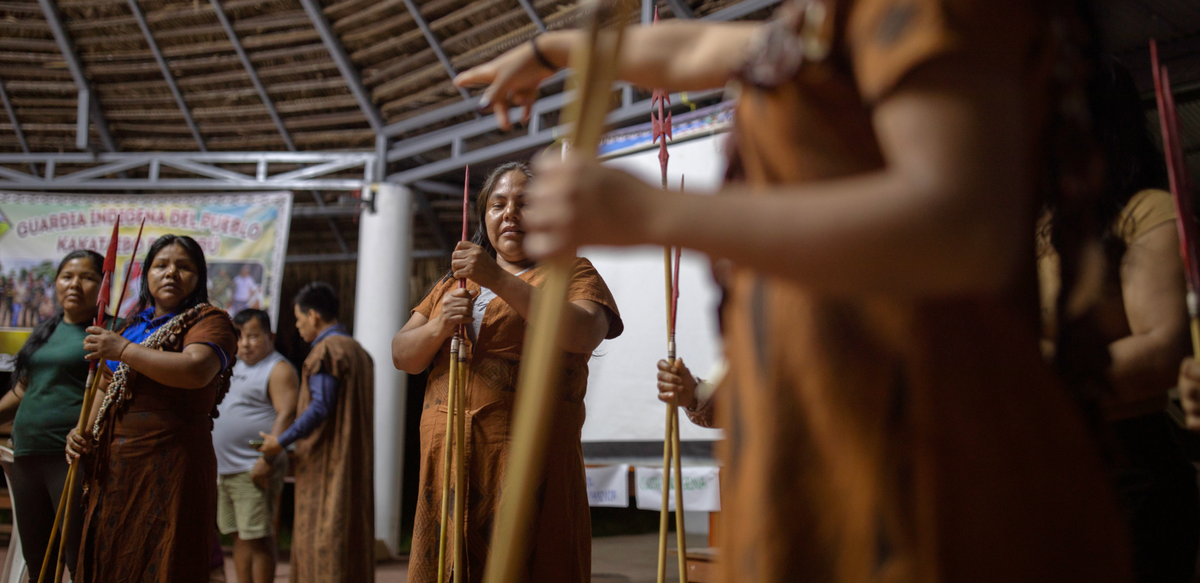
“Civilians in Catatumbo have been victimised twice,” the experts said. “The limited presence of the State has first allowed non-state armed groups to flourish. During the recent wave of violence, these groups have then targeted peasants, Indigenous Peoples, migrants and refugees, as well as human rights defenders, teachers, social leaders and ex-FARC-EP combatants who signed the peace agreement.”
While acknowledging progress in the Government’s humanitarian response, the experts called for further efforts to provide equitable protection and assistance and ensure a long-term solution to the conflict.
“We note the Government’s declaration of a state of emergency and implementation of exceptional measures to ensure the delivery of humanitarian aid,” the experts said.
“However, we urge the Government to respect international human rights and humanitarian standards that continue to apply during states of emergency and ensure that all displaced and confined populations, regardless of their location and nationality, receive adequate protection and assistance tailored to effectively address the needs of women, girls, older persons, persons with disabilities, Indigenous Peoples, peasants, migrants, and refugees. The Government must also ensure that human rights defenders can continue to carry out their legitimate activities, and that Indigenous Peoples and peasants, most of whom only have informal land rights, are protected from land dispossession in displacement.”
“We also urgently call on the ELN and Frente 33 to lay down their arms, end their violations of international humanitarian and human rights law, and prioritize dialogue, and on the Government to prioritise the protection of civilians, both in its negotiations with non-state armed groups and by ensuring the effective presence of the State throughout Colombia.”
The experts are in contact with Colombia, the ELN, and the Frente 33 about their concerns.
*The experts: Paula Gaviria Betancur, Special Rapporteur on the human rights of internally displaced persons; Michael Fakhri, Special Rapporteur on the right to food; Mary Lawlor, Special Rapporteur on human rights defenders; Morris Tidball-Binz, Special Rapporteur on extrajudicial, summary, or arbitrary executions; Gehad Madi, Special Rapporteur on the human rights of migrants; Gabriella Citroni (Chair-Rapporteur), Grażyna Baranowska (Vice-chair); Aua Baldé, Ana-Lorena Delgadillo Pérez y Mohammed Al-Obaidi, Working Group on enforced or involuntary disappearances; Farida Shaheed, Special Rapporteur on the right to education; Balakrishnan Rajagopal, Special Rapporteur on the right to adequate housing; Reem Alsalem, Special Rapporteur on violence against women and girls; Geneviève Savigny (Chair-Rapporteur), Carlos Duarte, Uche Ewelukwa, Shalmali Guttal, Davit Hakobyan, Working Group on the rights of peasants and other people working in rural areas; Laura Nyirinkindi (Chair), Claudia Flores (Vice-Chair), Dorothy Estrada Tanck, Ivana Krstić, and Haina Lu, Working group on discrimination against women and girls; Tomoya Obokata, Special Rapporteur on contemporary forms of slavery, including its causes and consequences; Claudia Mahler, Independent Expert on the enjoyment of all human rights by older persons; Siobhán Mullaly, Special Rapporteur on trafficking in persons, especially women and children
Special Rapporteurs/Independent Experts/Working Groups are independent human rights experts appointed by the United Nations Human Rights Council. Together, these experts are referred to as the Special Procedures of the Human Rights Council. Special Procedures experts work on a voluntary basis; they are not UN staff and do not receive a salary for their work. While the UN Human Rights office acts as the secretariat for Special Procedures, the experts serve in their individual capacity and are independent from any government or organization, including OHCHR and the UN. Any views or opinions presented are solely those of the author and do not necessarily represent those of the UN or OHCHR.
Country-specific observations and recommendations by the UN human rights mechanisms, including the special procedures, the treaty bodies and the Universal Periodic Review, can be found on the Universal Human Rights Index https://uhri.ohchr.org/en/
For more information and media requests please contact: Krishnan Raghavan (krishnan.raghavan@un.org)
For media enquiries regarding other UN independent experts, please contact Maya Derouaz (maya.derouaz@un.org) and Dharisha Indraguptha (dharisha.indraguptha@un.org).
Follow news related to the UN’s independent human rights experts on X: @UN_SPExperts
Original Source: webpage